Morning Stretches: A Simple Guide For Older Adults
By:Author:Senior Diet Editorial
Updated on:October 18, 2026

- Does Stretching First Thing Actually Help?
- Morning Stretching Versus Evening Stretching
- Why a Short Routine Beats an Ambitious One
- Matching Morning Stretches to Your Situation
- Making Morning Stretches Fit a Normal Routine
- The Myth That Stretching Alone Builds Strength
- Pairing Senior Diet With a Morning Stretch Habit
- Building a Morning Routine That Sticks
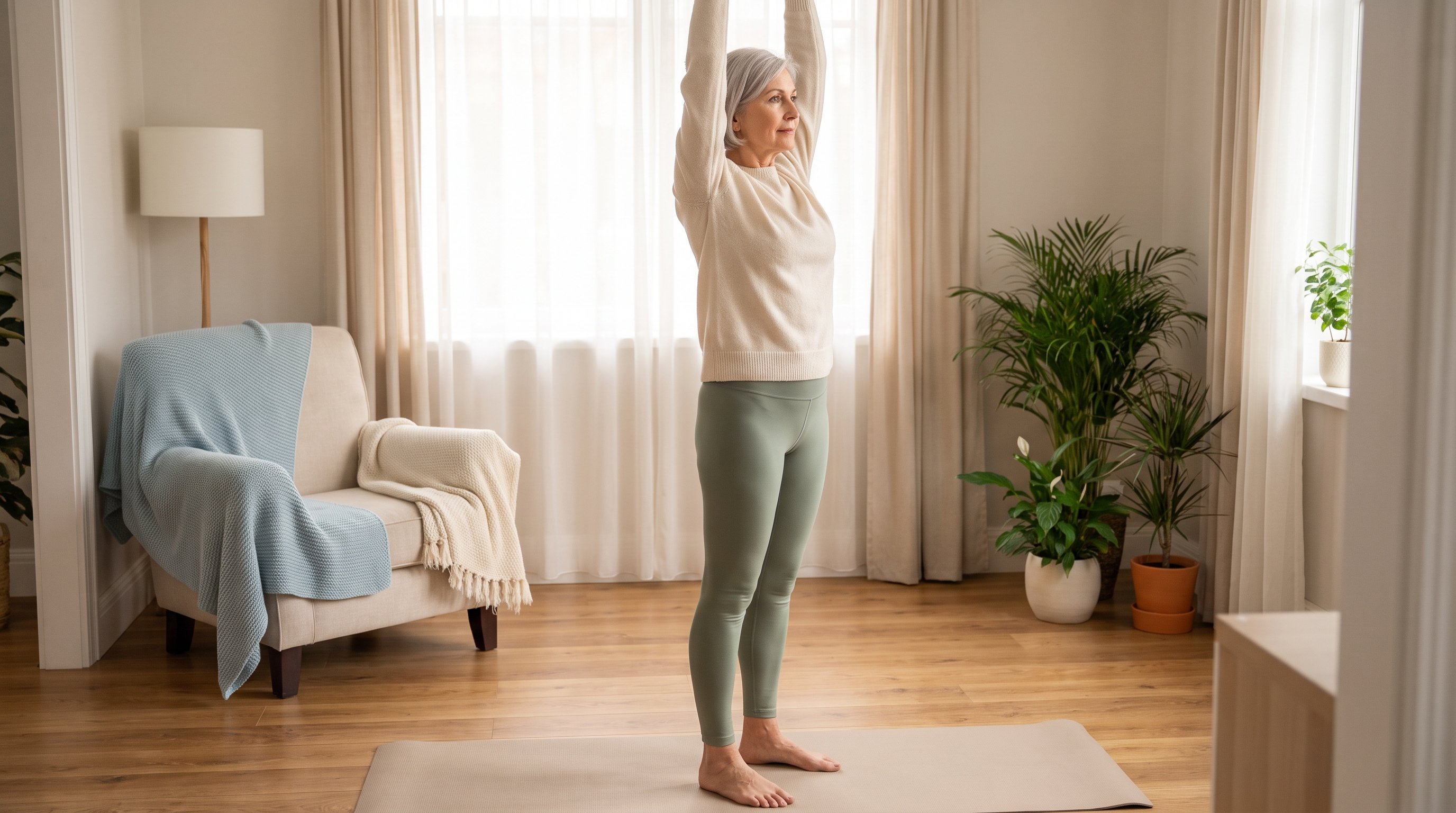
Morning stretches loosen stiff joints and muscles after hours of lying still, making the first steps out of bed feel less rigid. They work by taking muscles and connective tissue through their range of motion, which encourages blood flow to the area and nudges the nervous system out of sleep mode.
The mechanism is simple: tissue that has not moved for hours is shorter and stiffer, and gentle movement reverses that temporarily.
This guide covers whether morning stretching actually changes anything, how it compares to stretching later in the day, who should adapt the routine and how, and the common myths worth dropping.
Does Stretching First Thing Actually Help?
Yes, in a modest and honest way. Stretching moves a joint through its range and asks the surrounding muscle to lengthen, which is why a stiff lower back or tight hamstring feels looser within a few minutes of starting.
What Changes in the Body
Muscles and tendons that have been still overnight have less fluid moving through them, so they feel tighter on waking. Slow movement through a stretch increases blood flow to that tissue and gives the joint capsule a chance to loosen, which is why mobility tends to improve within the session itself.
What It Does Not Do
Stretching does not build muscle, does not burn a meaningful number of calories, and does not change body shape in any one area. What it reliably does is make the next movement, whether that is standing up, walking to the kitchen, or getting dressed, feel less stiff.
The arithmetic here is plain rather than dramatic: a handful of stretches covering the neck, shoulders, back, hips and calves takes only a few minutes, and that time buys an easier start to the rest of the morning's movement.
Morning Stretching Versus Evening Stretching
The real choice most people weigh is not whether to stretch, but when. Morning stretching targets the stiffness that builds up overnight, while evening stretching targets the tightness that builds up from a day of sitting or walking.
Both work on the same mechanism, so the decision usually comes down to which time of day someone can actually stick with.
| Factor | Morning Stretching | Evening Stretching |
|---|---|---|
| Main benefit | Eases overnight stiffness | Releases daytime tension |
| Best paired with | A short walk after | Winding down before bed |
| Time needed | A few minutes | A few minutes |
| Common barrier | Feeling rushed | Feeling too tired |
| Easiest to build into | A fixed wake-up routine | A fixed bedtime routine |
Neither option beats the other on paper, so the better choice is whichever time of day is least likely to get skipped.
Why a Short Routine Beats an Ambitious One
The harder alternative is a long, structured flexibility session with a dozen poses held for a set count. The easier route is five or six stretches done while the kettle boils.
A short routine wins on adherence because it fits into a morning that already has a shape, rather than asking for a new block of time.

A stretch that gets done most days beats an ambitious routine that gets done once and then abandoned.
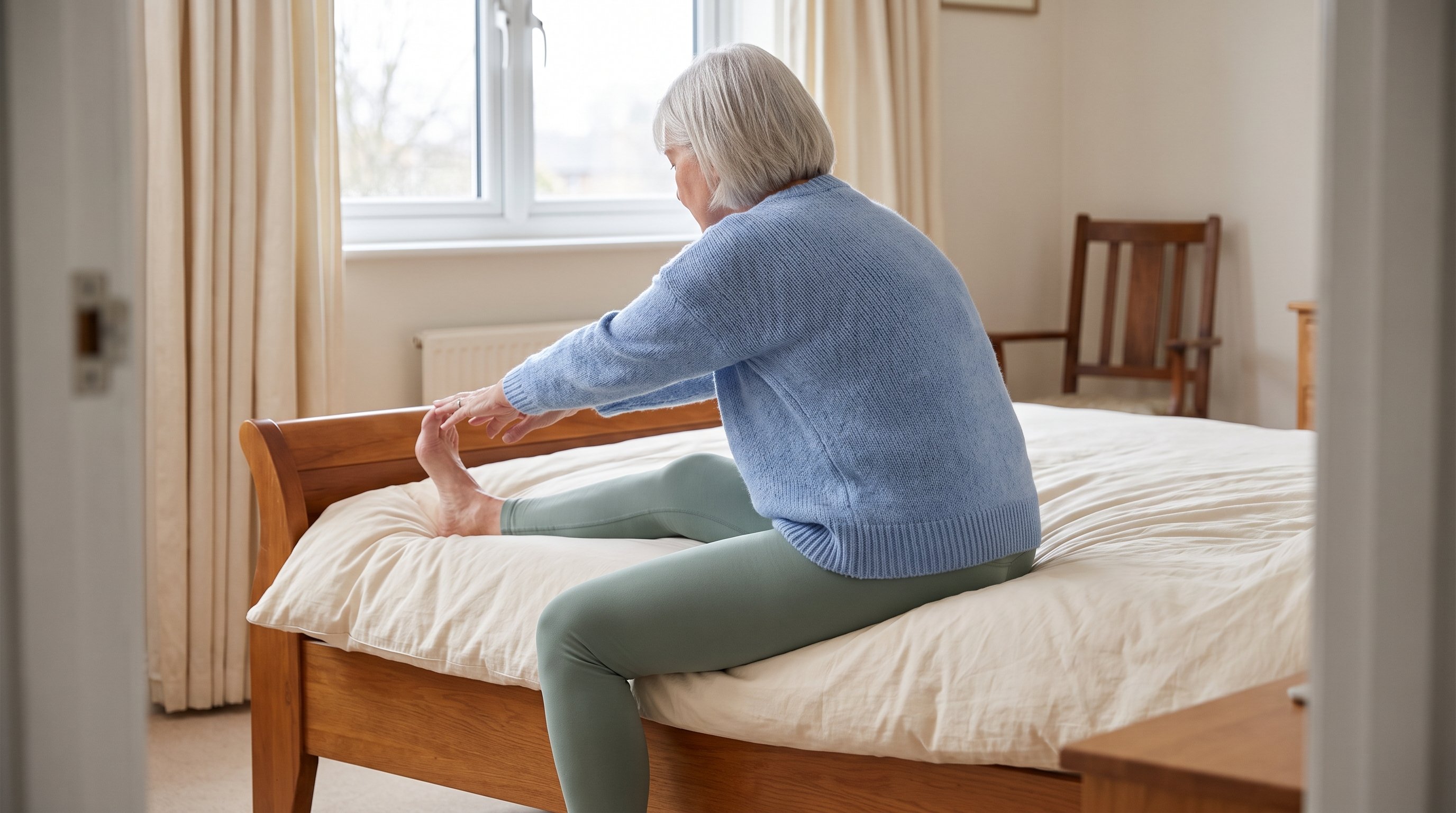
Five minutes of neck rolls, shoulder circles, a gentle back extension, a seated hamstring reach and an ankle roll covers most of the stiffness that builds overnight, without needing a mat, a timer or a special outfit.
Matching Morning Stretches to Your Situation
If You Are New to Stretching
Start seated or standing with support nearby, such as a counter or sturdy chair. Move slowly, stop at the point of mild tension rather than pain, and skip anything that pulls on a joint that already feels sore.
If Mornings Are Rushed
Do the stretches in bed before standing, or while the coffee brews. Three or four moves done daily beat eight moves done twice a week.
If Joints Feel Stiff or Achy
Smaller ranges of motion and slower pace matter more than reaching further. A gentle ankle circle or shoulder shrug still counts, even if it looks modest next to a full stretch.
If Balance Is a Concern
Do standing stretches near a wall, counter or sturdy chair back, and favour seated versions of hip and leg stretches where possible.
Making Morning Stretches Fit a Normal Routine
The easiest way to keep a stretching habit going is to tie it to something that already happens every morning, like brushing teeth or waiting for the kettle.
That removes the need to remember a new task, because it rides along with an existing one.
Stretching sits more comfortably in a morning that also has some structure around food and movement, which is where a tool like Senior Diet can help by keeping a short list of low-impact exercises, a step counter and a water tracker in one place, so stretching becomes one item on a short list rather than something to remember on its own.
The Myth That Stretching Alone Builds Strength
A common hope is that a morning stretch routine will also build muscle, shift weight, or fix joint pain on its own. It will not, because stretching lengthens tissue rather than loading it, and loading is what builds strength.
There is also no such thing as stretching to target fat in one area of the body; the body does not lose fat from a specific spot no matter which muscle gets stretched.
The honest version: stretching keeps joints moving well and reduces morning stiffness, while strength and weight changes come from a mix of movement, protein intake and overall activity across the week.
Pairing Senior Diet With a Morning Stretch Habit
Stretching handles mobility, but it works alongside the rest of the day, what gets eaten, how much movement follows, and how progress gets tracked.
Senior Diet brings those pieces together with low-impact guided exercise sessions that can follow a stretch routine, a high-protein meal plan built around food that is already familiar, and trackers for steps, water and weight so the morning habit has something to connect to.
Lifestyle challenges inside the app can also turn a stretch-every-morning goal into something with a clear shape, rather than a vague intention.

Feel Younger Every Day
Healthy Aging Made Simple
Building a Morning Routine That Sticks
Pick three or four stretches, attach them to something already done every morning, and let the routine stay small enough to finish even on a slow day.
Senior Diet can hold the rest of the morning together, from a short low-impact exercise video to a tracker that logs the walk that follows.
FAQ
Not directly, because stretching does not burn a meaningful number of calories or change body shape. It can make it easier to move comfortably into the rest of the day's activity, which is where weight management actually happens.
Yes, because joints and muscles have had hours without movement, which reduces blood flow and tightens surrounding tissue temporarily. Gentle movement after waking is a reasonable way to ease that stiffness rather than something to worry about.
Stop the stretch and ease back to a point that feels like mild tension rather than pain. Pushing through sharp or shooting discomfort does not speed anything up and can make a joint feel worse for the rest of the day.
Attach the stretches to something that already happens every morning, like brushing teeth, rather than relying on memory alone. Senior Diet's tracker and lifestyle challenges can also give the habit a visible shape, which makes it easier to notice a missed day and pick it back up.
Share this post