Beginner Stretching Routine: A Gentle Start You Can Keep Up
By:Author:Senior Diet Editorial
Updated on:October 18, 2026
- A Simple Week of Gentle Stretches Anyone Can Copy
- How Often a Beginner Stretching Routine Should Run
- Why a Short Gentle Routine Beats an Intense Flexibility Push
- Fitting Gentle Stretching Into an Already Busy Day
- Matching a Stretching Routine to Different Situations
- What to Expect in the First Few Weeks of Stretching
- Supporting a Stretching Habit With Senior Diet's Movement Library
- Making a Beginner Stretching Routine Stick
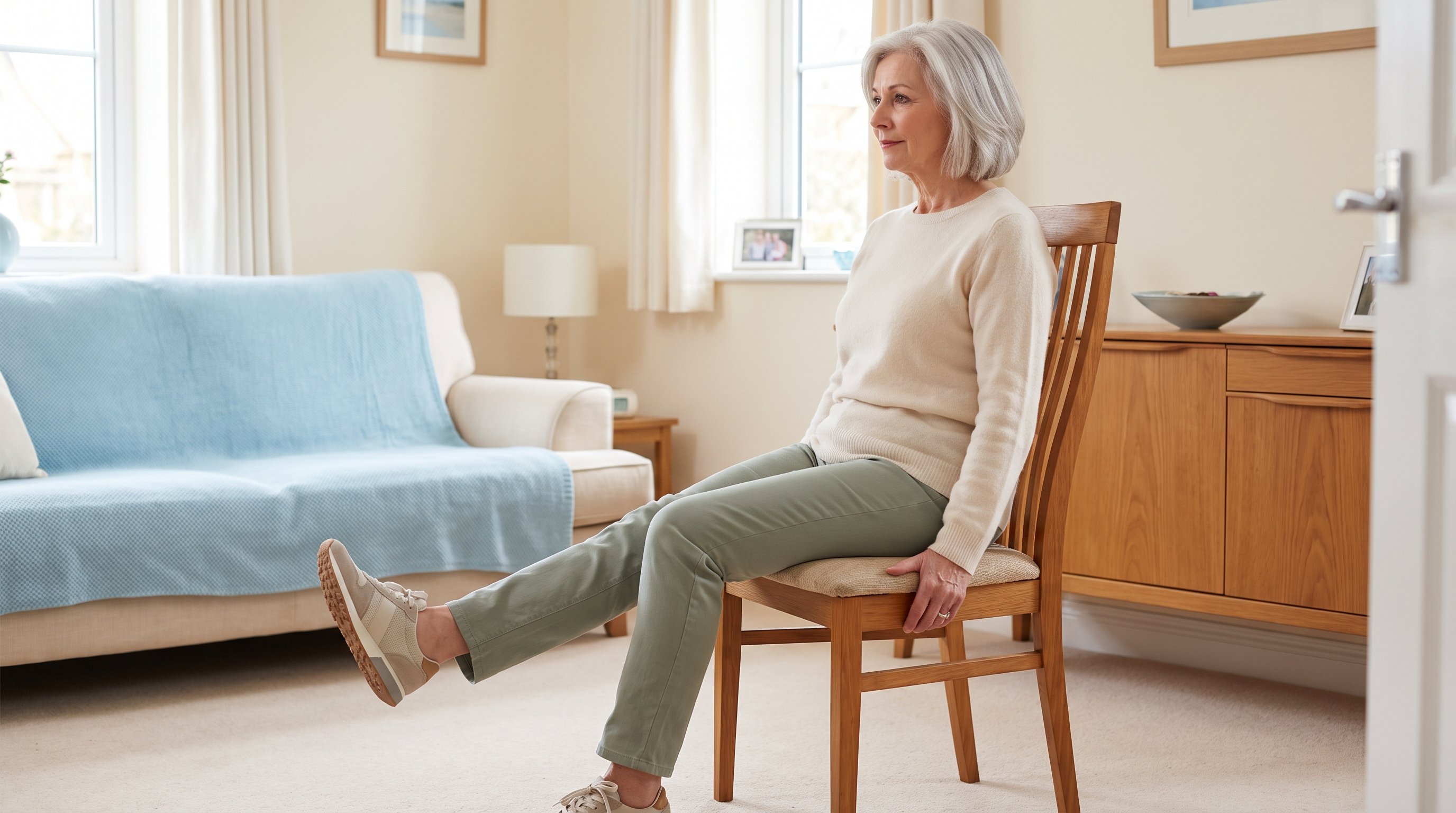
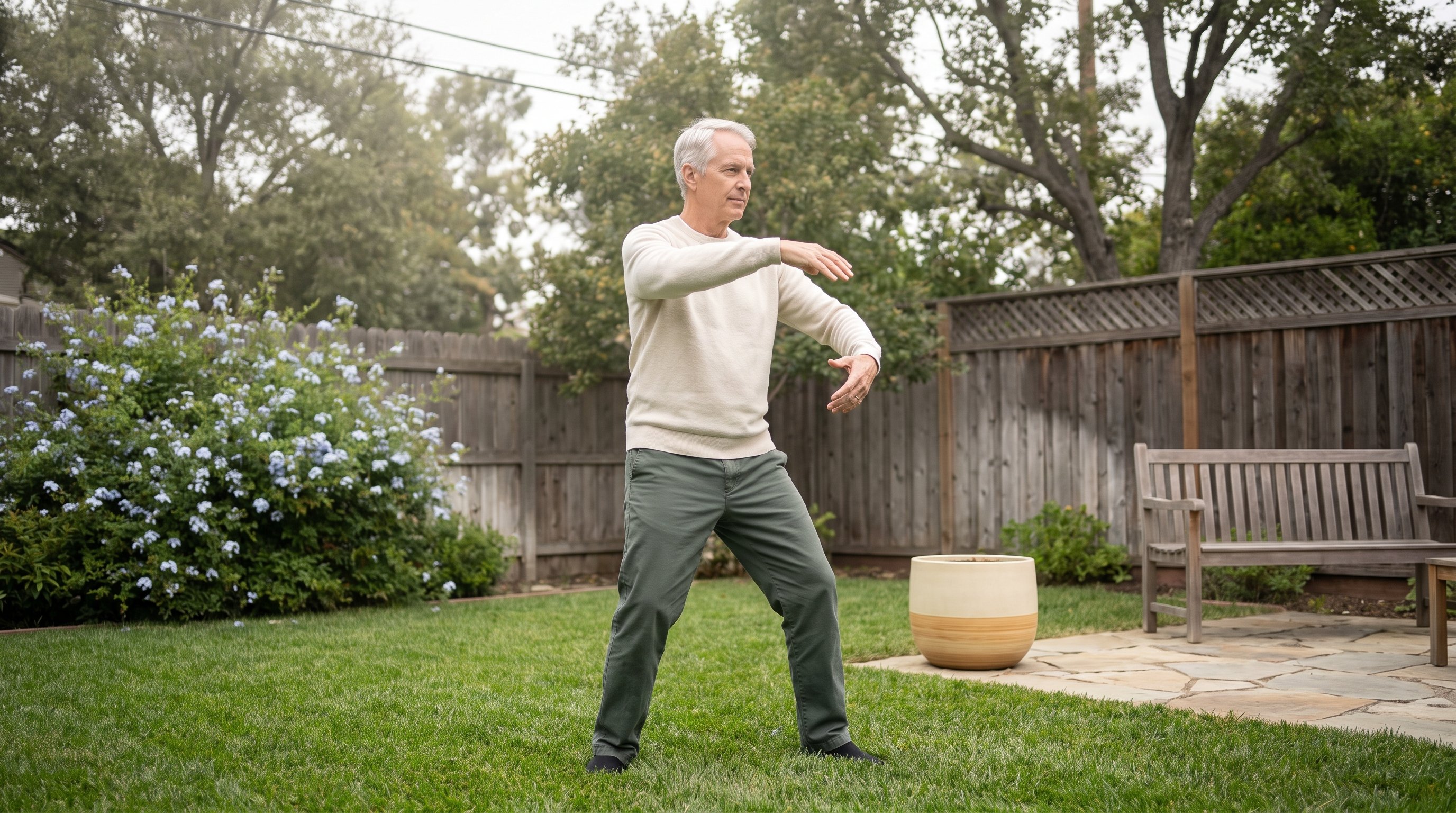
A beginner stretching routine works best when it is short, slow, and done most days rather than occasionally for a long time. Ten minutes of gentle stretching, a few times a week, is enough to start loosening tight muscles and easing stiff joints.
Stretching lengthens muscle fibres gradually and encourages joints to move through a fuller range without strain. Held gently and without bouncing, it signals the nervous system to relax tension around a joint rather than fight it.
This guide covers what a simple stretching week looks like, how often to do it, why starting small beats an ambitious plan, and how to fit it around a normal routine.
A Simple Week of Gentle Stretches Anyone Can Copy
A beginner week does not need variety every day. Repeating the same short routine helps the body learn the movements and builds confidence.
A Sample Stretching Week
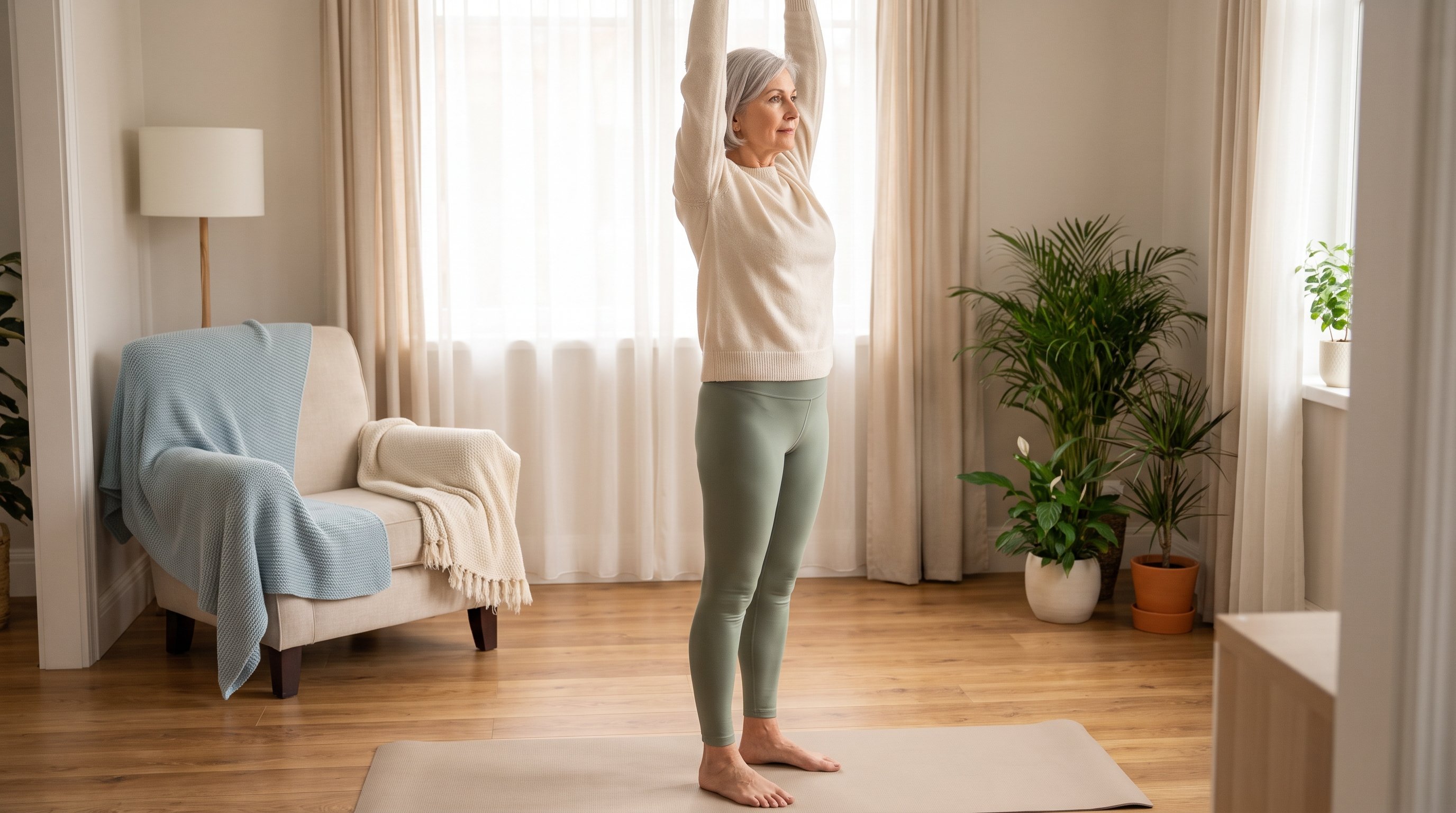
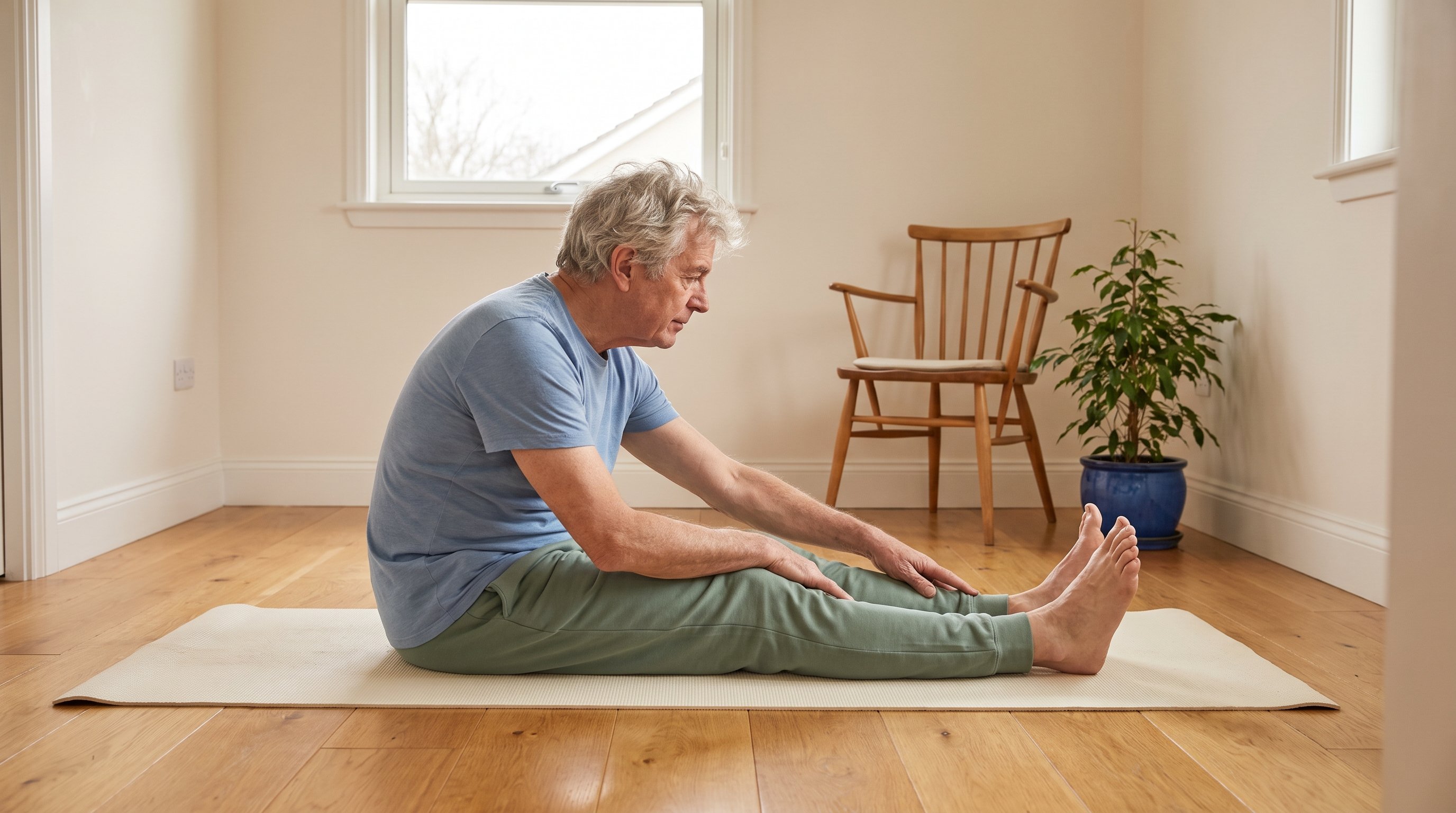
- Monday - neck rolls, shoulder rolls, seated hamstring stretch, calf stretch against a wall
- Tuesday - rest or a slow walk instead of stretching
- Wednesday - repeat Monday's routine, holding each stretch a few seconds longer
- Thursday - rest or a slow walk instead of stretching
- Friday - same routine, adding a gentle seated spinal twist
- Weekend - one easy session, whichever day feels right
That is five sessions spread across a week, with rest days built in on purpose. Nobody needs to stretch every single day to notice looser shoulders or an easier reach to put shoes on.
How Often a Beginner Stretching Routine Should Run
A Simple Frequency Guide
The table below is a starting point, not a rule carved in stone. Adjust the time and frequency as stretches start to feel easier.
| Stretch Area | How Often | How Long to Hold |
|---|---|---|
| Neck and shoulders | Daily | 10 to 15 seconds |
| Hamstrings | 3 to 4 times a week | 15 to 20 seconds |
| Calves | 3 to 4 times a week | 15 to 20 seconds |
| Lower back and hips | 3 times a week | 10 to 15 seconds |
| Chest and upper back | 3 times a week | 10 to 15 seconds |
Add up the numbers and a full beginner session rarely takes more than ten minutes. That is the whole point - small and repeatable beats long and occasional.
Why a Short Gentle Routine Beats an Intense Flexibility Push
Picture two approaches side by side: a ten-minute gentle stretch done most days, versus an hour-long intense flexibility class done once a week. The intense class might feel more impressive on paper, but it asks a lot of a body that has not warmed up to that range of motion yet.
Muscles and connective tissue adapt gradually. Pushing hard once a week without the groundwork of daily gentle movement often leaves people sore enough that they skip the next session altogether.
A short daily or near-daily routine keeps showing up on the calendar because it asks so little of any single day. Consistency, not intensity, is what actually widens a comfortable range of motion over time.
Fitting Gentle Stretching Into an Already Busy Day
Stretching does not need a dedicated gym bag or a block of free time. It fits next to things already happening - while the kettle boils, during a TV advert break, or right after getting out of bed.
Pairing stretches with an existing habit, like brushing teeth or waiting for coffee, removes the need to remember a new routine from scratch.
Senior Diet's library of guided audio and video sessions includes gentle stretching content that fits around a normal schedule, so there is no need to plan a routine from a blank page.
Matching a Stretching Routine to Different Situations
Just Starting Out
Begin with two or three stretches, held gently for ten seconds, and stop well before any pulling sensation turns sharp. Fewer stretches done correctly beat a long list done carelessly.
Short on Time
Pick three areas that feel tightest - often the neck, shoulders, and hamstrings - and stretch only those for a few minutes. A short session repeated often still adds up.

Managing Stiff or Sore Joints
Stretch after a short warm-up, such as a slow walk around the room, rather than first thing when joints feel coldest. Smaller movements through a comfortable range matter more than reaching further than feels right.
Coming Back After a Break
Restart at the easiest version of the routine, even if it once felt simple. Flexibility built up gradually also eases off gradually, so there is no shame in going back to basics.
What to Expect in the First Few Weeks of Stretching
The early weeks of any beginner stretching routine can feel underwhelming, because flexibility changes slowly and quietly. This is often where people lose interest and assume it is not working.
Reaching a shoelace, turning to check a blind spot, or getting up from a low chair a little more easily are the kinds of small signs worth watching for instead of a flexibility test.
Staying with the routine through the quiet weeks, rather than judging it too early, is what makes the difference between a habit that lasts and one that fizzles out by week three.
Supporting a Stretching Habit With Senior Diet's Movement Library
A stretching routine works best as part of a wider pattern of movement, steady eating, and rest - not as an isolated five minutes squeezed into a day.
Senior Diet brings low-impact exercise sessions, guided video and audio content, and progress trackers for steps, water, and weight into one place, so stretching sits alongside the rest of a daily routine instead of standing apart from it.
Lifestyle challenges inside the app can also nudge a stretching habit forward by turning small, repeatable actions into something worth tracking week to week.
Feel Younger Every Day
Healthy Aging Made Simple
Making a Beginner Stretching Routine Stick
The simplest way to keep a beginner stretching routine alive is to attach it to something already on the calendar, keep sessions short, and let progress stay slow and steady rather than rushed.
A single concrete step today: pick three stretches from the sample week above and do them right after getting out of bed tomorrow morning, and the next day pairing that with Senior Diet's guided movement content can keep the habit going without having to think too hard about what comes next.
FAQ
Gentle, regular stretching can ease stiffness by gradually encouraging muscles and joints to move through a fuller range. It works through slow repetition rather than a single dramatic session.
Stretching improves flexibility and range of motion, but it does not build muscle strength the way resistance or low-impact strength work does. Pairing it with other gentle movement rounds out a routine rather than relying on stretching alone.
Every stretch can be shortened or supported with a chair, wall, or towel, so there is no single correct depth to reach. The goal is a gentle pull, never pain, so adjusting the range to fit the day is expected, not a failure.
Flexibility changes slowly, so early weeks can feel uneventful even when the routine is working quietly in the background. Keeping sessions short and pairing them with Senior Diet's guided content and trackers can make the habit easier to notice and keep going.
Share this post