Low Impact Workout: A Guide For Joints That Still Want To Move
By:Author:Senior Diet Editorial
Updated on:October 18, 2026

- Does a Low Impact Workout Really Build Strength?
- Low Impact Versus High Impact: Weighing the Two
- Why the Gentler Option Wins Over Time
- Matching Low Impact Moves to Your Situation
- Fitting Low Impact Training Into a Normal Week
- The Myth That Gentle Exercise Targets One Area
- Making Senior Diet Part of a Low Impact Routine
- Keeping Joints Moving Without Pushing Through Pain
A low impact workout is any movement that keeps at least one foot on the ground, so joints absorb less shock than they would from running or jumping. It still raises your heart rate and works your muscles - it just does it without the pounding.
The mechanism is simple: muscles do not know whether force comes from a hop or a controlled step, they just respond to tension and repetition. Joints, on the other hand, notice the difference, because impact force is what wears on cartilage and flares up stiffness.
This guide covers whether low impact training actually works, how it compares with higher-impact options, who it suits best, and how to build it into a normal week without it turning into another thing you quit by February.
Does a Low Impact Workout Really Build Strength?
Yes, because strength comes from resistance and repetition, not from how hard your feet hit the floor. A bodyweight squat, a resistance-band row, or a slow step-up all load the same muscles a higher-impact move would, just without the jarring landing.
The arithmetic is straightforward. If you do three sets of twelve chair squats three times a week, that's 108 squats a week working your quads and glutes - the same muscles a jogger uses, minus the repeated impact through the knees and hips.
What Changes and What Does Not
What changes is the joint load, not the muscle demand. What does not change is the need for progressive effort - a low impact move done without any resistance or added reps eventually plateaus, same as anything else.
That's the honest trade: you give up some impact-driven bone loading, and in return you get a style of training you can actually keep doing for years without aggravating a joint.
Low Impact Versus High Impact: Weighing the Two
The decision most people are actually weighing is low impact training against higher-impact cardio like running, jumping rope, or high-intensity interval circuits.

| Factor | Low Impact | High Impact |
|---|---|---|
| Joint stress | Minimal, one foot down | High, repeated landing force |
| Calorie burn per session | Moderate, steady pace | Higher, but shorter sessions |
| Injury risk | Lower for sore joints | Higher without conditioning |
| Consistency over months | Easier to sustain daily | Often skipped on bad days |
| Equipment needed | Chair, mat, bands | Supportive shoes, open space |
Neither option is wrong. The table just shows why one tends to fit a week that also includes sore knees, a bad back, or simply less patience for recovering from a hard session.
Why the Gentler Option Wins Over Time
A high-intensity circuit might burn more calories in thirty minutes than a low impact session does. But a session you skip because your knee is still sore from Tuesday burns zero calories, which is the real comparison that matters.
Low impact training wins on adherence because it rarely leaves you sidelined the next day. If you can do it four times a week for months instead of twice a week for three weeks before a flare-up stops you, the total volume of movement comes out ahead.
This is not about one method being more effective in a lab. It's about which one you will still be doing in six months, because consistency, not intensity, is what adds up.
Matching Low Impact Moves to Your Situation
Starting From Scratch
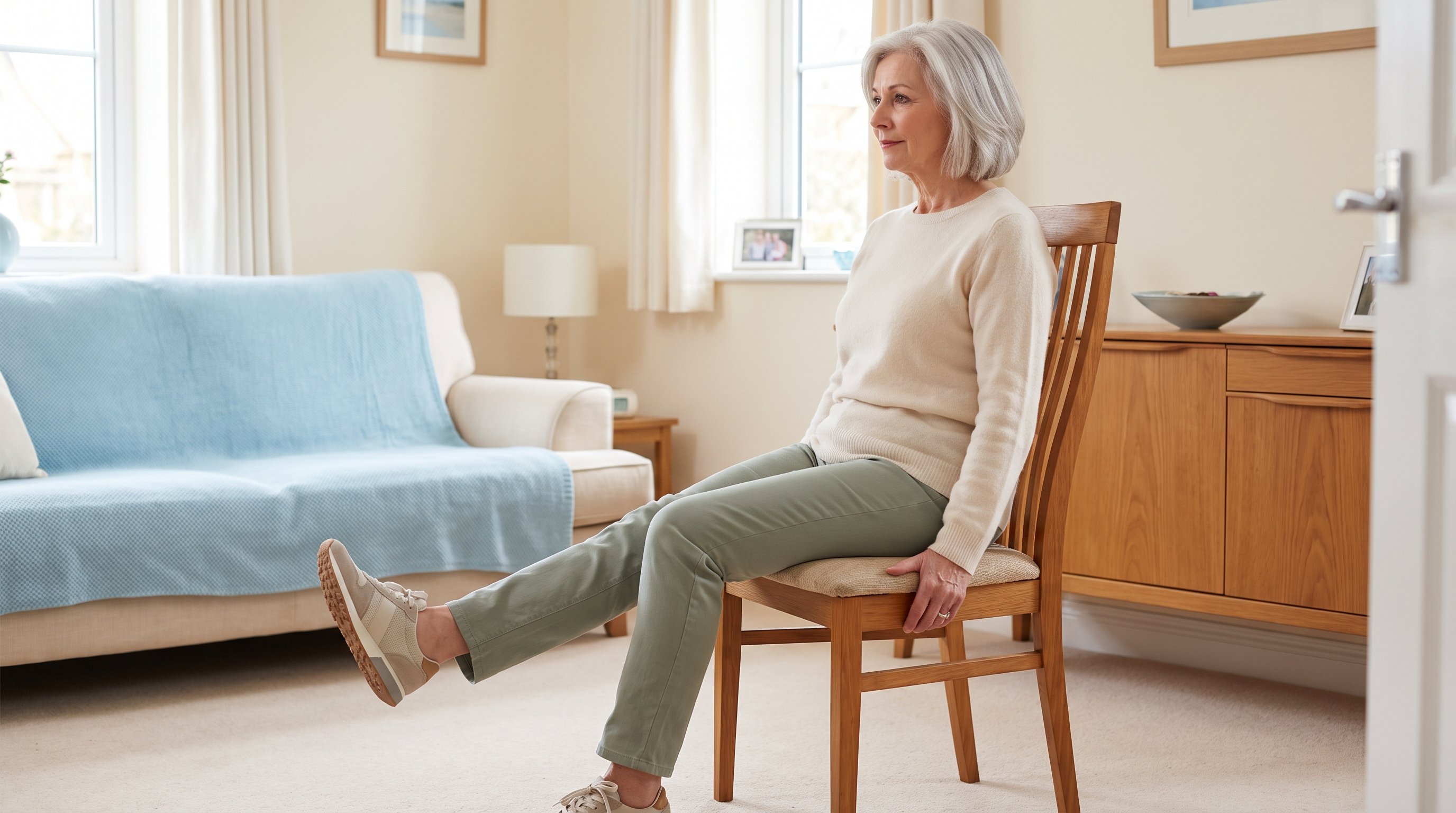
If you have not exercised in a while, begin seated: leg extensions, seated marches, and arm circles build a base without asking your balance to do too much too soon.
Living With Joint Pain
If knees or hips are the issue, water-based movement or a stationary bike removes most of the weight-bearing stress while still working the same muscle groups.
Short on Time
If your week is packed, ten minutes of standing resistance-band work twice a day covers similar ground to one longer session, since total weekly volume is what counts.
Managing Balance Concerns
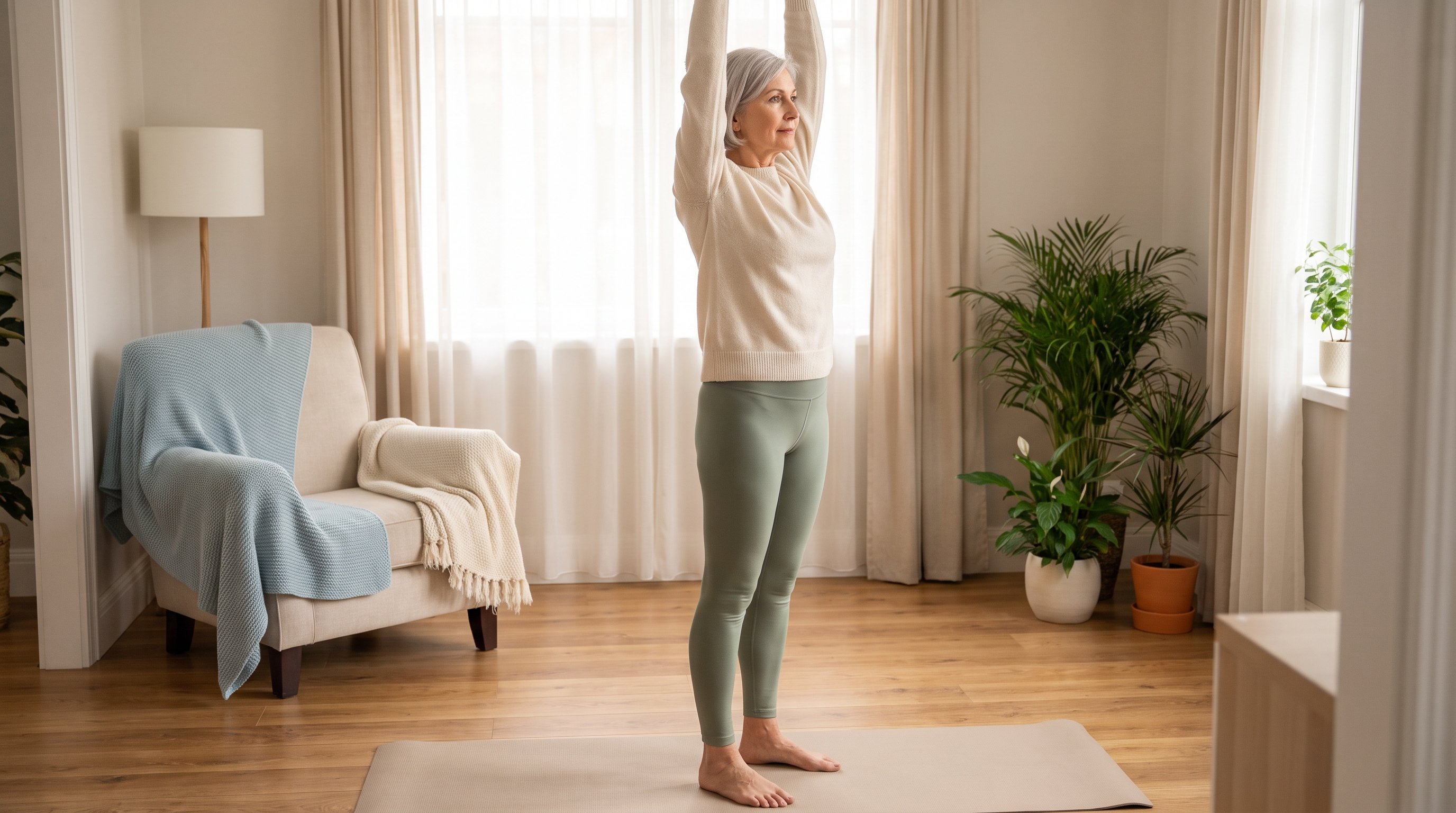
If stability is a worry, holding onto a chair or counter during standing moves lets you still load the muscles without risking a fall.
Fitting Low Impact Training Into a Normal Week
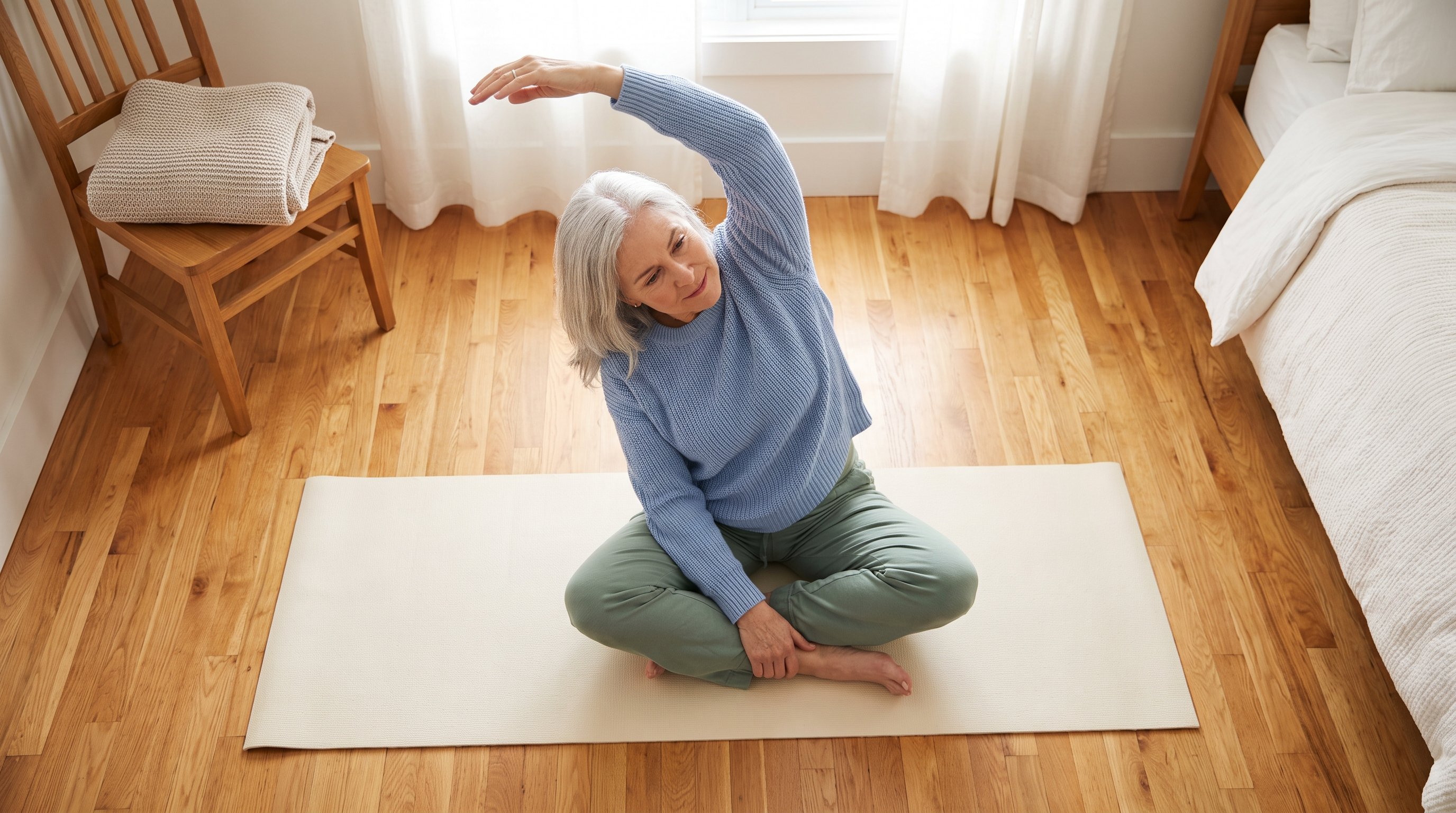
A realistic week might look like this: two sessions of seated or standing strength moves, two short walks, and one day of gentle stretching - none of it requiring a gym.
The hard part is rarely the exercises themselves, it's remembering to do them and knowing whether they are adding up to anything. This is where guided video routines and a simple tracker help, because you are not guessing whether today counted.
Senior Diet includes low impact exercise videos alongside a step counter, so the walking and the seated strength work both land in the same place instead of being tracked in your head.
The Myth That Gentle Exercise Targets One Area
No exercise, low impact or otherwise, reshapes one specific area of the body. The idea that seated leg lifts will slim the thighs or that arm circles will tone just the upper arms is not how muscle and fat actually work.
Muscles respond to the work you give them by getting stronger underneath wherever fat sits, but where the body stores or releases fat is not something a specific exercise can choose.
The real answer is less exciting but more useful: consistent movement across the whole body, combined with what you eat, changes how you feel and function - not the shape of one body part on command.
Making Senior Diet Part of a Low Impact Routine
Keeping a low impact habit going is easier when the exercise, the food, and the tracking all live in one place instead of three different notebooks and apps.
Senior Diet pairs guided low impact video sessions with a tailored high-protein meal plan, so the strength work you are doing has something to rebuild muscle from.
The step counter, water tracker, and weight tracker sit in the same app, which means you can see the week's movement and meals together instead of trying to remember if Tuesday actually happened.

Feel Younger Every Day
Healthy Aging Made Simple
Keeping Joints Moving Without Pushing Through Pain
Pick one low impact move you can do today - a set of chair squats, a slow lap around the garden, a few minutes of seated marching - and do it before deciding whether the whole routine is too much.
Senior Diet can hold the rest of the plan - the meals, the tracking, the next session - so the only decision left each day is showing up for a few minutes.
FAQ
It can contribute to a calorie deficit the same way any movement does, by adding to the energy you burn across the week. Weight change depends on the balance between what you eat and what you move, not on the impact level of the exercise alone.
Effort is set by resistance, reps, and effort level, not by how much force hits the floor. A slow, controlled set of standing squats with a resistance band can feel just as demanding as a higher-impact move, without the landing stress.
On harder days, scale back to a smaller range of motion or shorter session rather than skipping entirely, since some movement tends to keep joints from stiffening further. If pain is sharp or new, it's worth getting it checked rather than pushing through.
Tracking small wins, like steps walked or sessions completed, keeps the routine visible instead of invisible. Senior Diet's trackers and lifestyle challenges give you something concrete to glance at on the days motivation alone is not enough.
Share this post