Healthy Meals For Seniors: A Simple Plate-Building Guide
By:Author:Senior Diet Editorial
Updated on:October 18, 2026

- Building a Healthy Plate Step by Step
- How Much Food Actually Belongs on the Plate
- Fitting Healthy Meals Into a Normal Week
- A Four-Week Way to Ease Into Better Meals
- When Healthy Eating Starts to Feel Ordinary
- Common Mistakes With Healthy Meals for Seniors
- Making Senior Diet Part of Everyday Healthy Eating
- Keeping Meals Simple for the Long Run
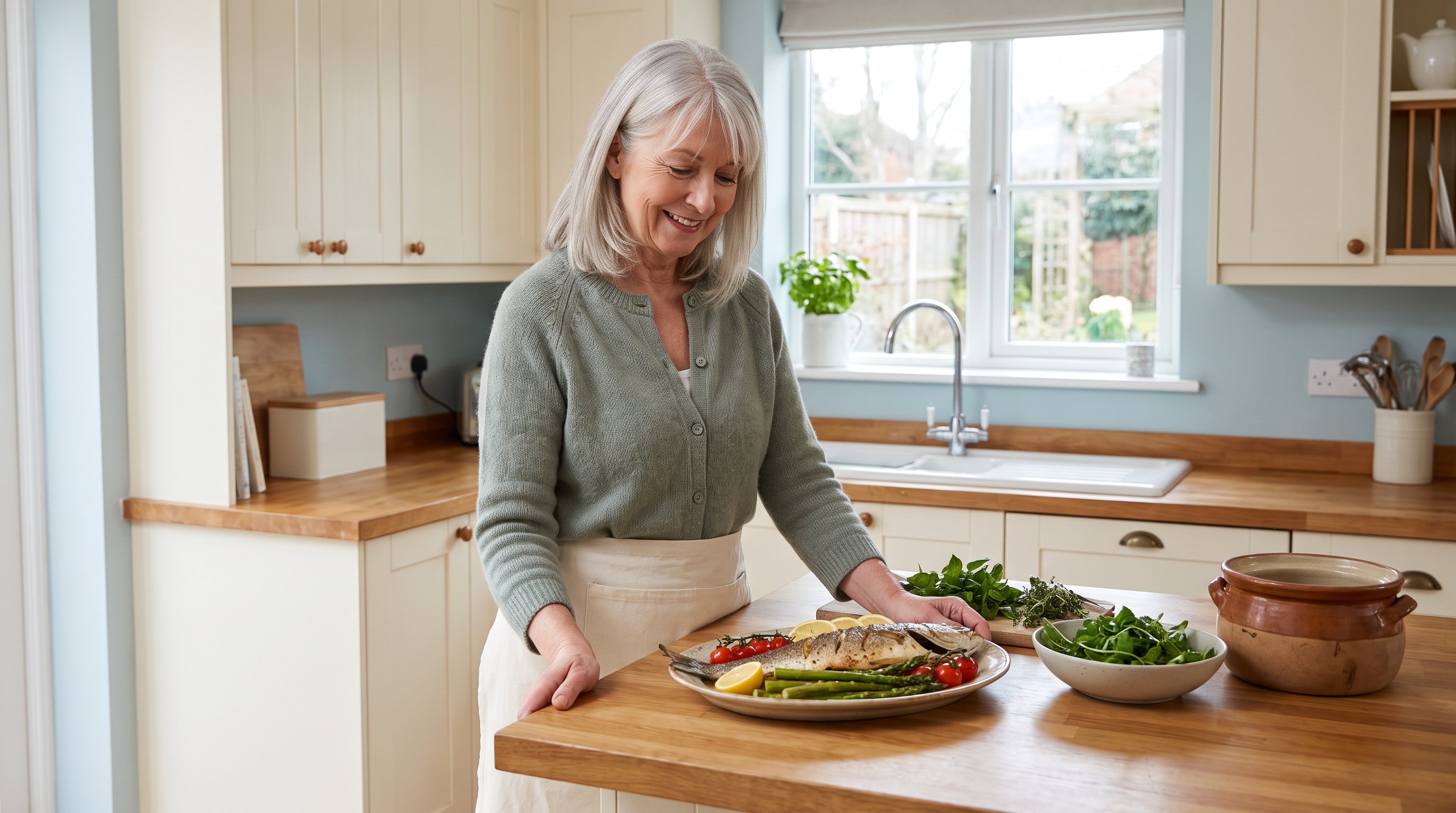
Healthy meals for seniors come down to three things on the plate: enough protein, colour from vegetables and fruit, and a carbohydrate that doesn't spike energy then crash it. Get those three right most days and the rest of the detail matters far less than people assume.
The mechanism is simple arithmetic, not magic. Protein holds muscle as the body ages, fibre and water from produce keep meals filling without piling on extra calories, and steadier carbohydrates mean fewer energy dips through the afternoon.
This guide covers how to build a plate step by step, how much to actually eat, a four-week way to ease into it, and the common mistakes that stall progress before it starts.
Building a Healthy Plate Step by Step
Nobody needs a new diet philosophy to eat better. A repeatable sequence for building each plate does more than any rulebook.
A Simple Plate-Building Sequence
- Start with protein - fish, eggs, poultry, beans or dairy, enough to cover roughly a quarter of the plate.
- Add two portions of vegetables or fruit - fresh, frozen or tinned all count toward the colour on the plate.
- Choose one carbohydrate - a modest portion of potatoes, rice, pasta or wholegrain bread rather than two stacked together.
- Add a small amount of healthy fat - olive oil, nuts or avocado to help the body use certain vitamins.
- Check the water glass - a full glass with the meal supports digestion and helps fibre do its job.
- Sit down to eat it - meals eaten slowly and away from distraction tend to register as more satisfying.
None of these steps demand special ingredients or a kitchen overhaul. They just give every meal a shape, so decisions get easier instead of harder over time.
How Much Food Actually Belongs on the Plate
Rough Portions That Work Without Weighing Anything
A palm-sized portion of protein, two open handfuls of vegetables, a cupped handful of carbohydrate and a thumb-sized amount of fat covers most main meals. It is a starting point, not a rule carved in stone.
| Food Group | Rough Portion | Example |
|---|---|---|
| Protein | Palm-sized piece | Chicken, fish, tofu |
| Vegetables | Two open handfuls | Broccoli, carrots, spinach |
| Carbohydrate | One cupped handful | Rice, potato, oats |
| Healthy fat | Thumb-sized amount | Olive oil, nuts, avocado |
| Fluids | One full glass | Water with the meal |
These portions work for most main meals most days. Appetite shifts from day to day, and a smaller or larger plate on any given day isn't something to worry about.
Fitting Healthy Meals Into a Normal Week
Real weeks involve tired evenings, grandchildren visiting, and days when cooking from scratch just isn't happening. A plan that only works on calm, unhurried days isn't really a plan.
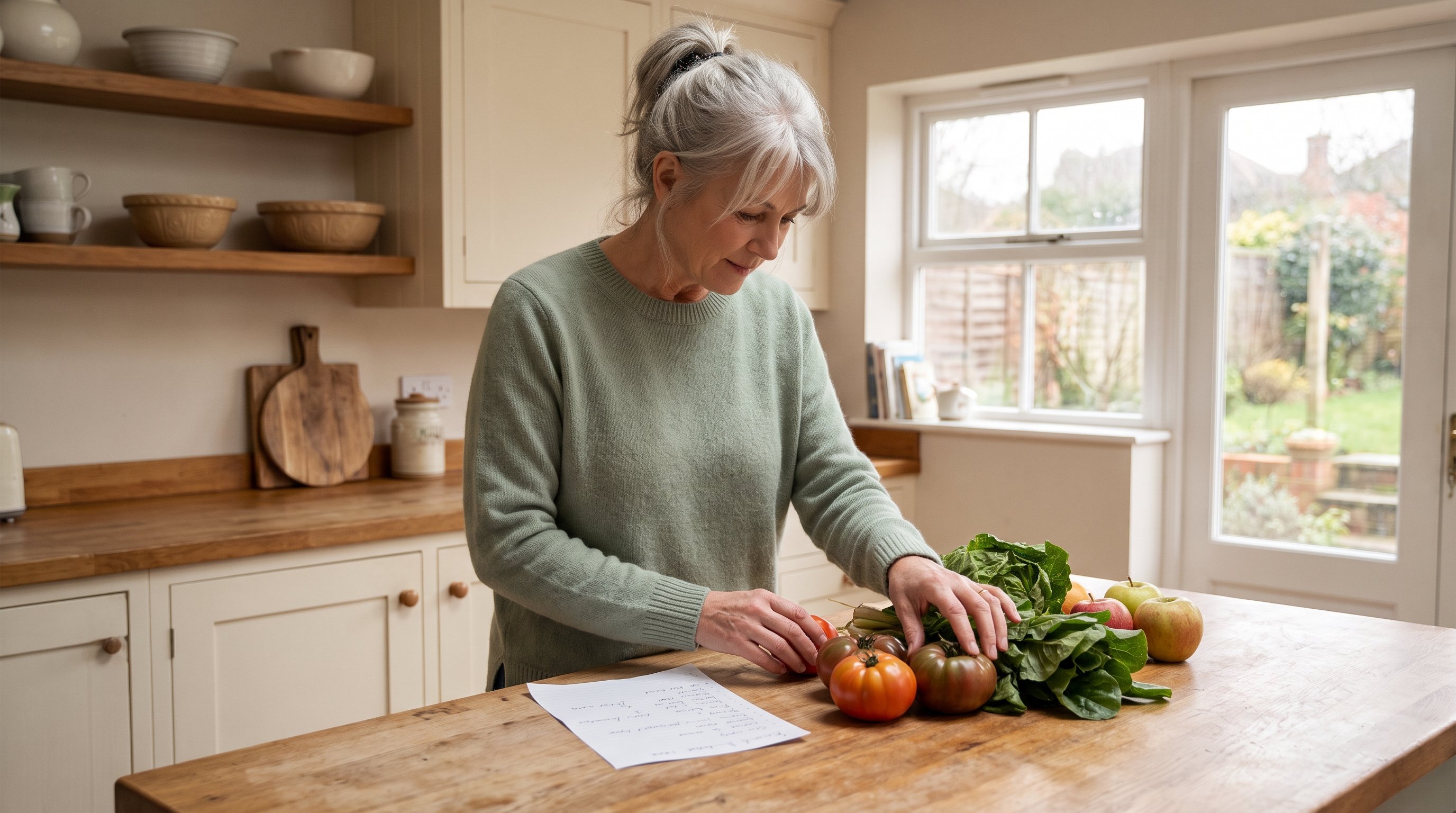
The fix is building in flexibility from the start: a few meals that reuse the same cooked protein, a freezer with backup portions, and a shopping list that doesn't require a special trip. This plate-building approach works the same way, with a meal plan built around food you already like, plus a shopping list so the steps happen without extra thinking.
A tired Tuesday shouldn't mean choosing between a proper meal and something quick and low in protein. With a short list of go-to meals on hand, it rarely has to.
A Four-Week Way to Ease Into Better Meals
Changing every meal at once rarely sticks. A gradual build gives new habits room to settle before the next layer gets added.
| Stage | Main Focus |
|---|---|
| Week 1 | Add a protein source to every meal |
| Week 2 | Add two portions of vegetables or fruit daily |
| Week 3 | Swap one refined carbohydrate for a wholegrain option |
| Week 4 | Build a simple weekly shopping list from repeat meals |
The order matters more than the exact week. Protein first, colour second, carbohydrate quality third, and routine last, so each layer has something to build on.
When Healthy Eating Starts to Feel Ordinary
Expect the first couple of weeks to feel like effort. Reaching for protein first or adding a second vegetable takes conscious thought before it becomes automatic.
There's no fixed point where it suddenly clicks, and that's fine. Somewhere past the early weeks, the plate-building steps stop feeling like a checklist and start feeling like how meals are just put together.
Energy levels and how clothes fit tend to shift slowly rather than all at once, so judging progress meal by meal rarely tells the full story. A weekly glance back at what actually got eaten is a far better gauge.
Common Mistakes With Healthy Meals for Seniors
Skipping Protein at Breakfast.
Toast and jam alone leaves the first meal of the day short on what keeps muscle and appetite steady. Adding eggs, yoghurt or a small portion of cottage cheese closes that gap without much extra effort.
Treating a Salad As the Whole Meal.
Vegetables without protein fill the stomach briefly but don't hold hunger off for long. Pairing greens with a protein source turns a side dish into an actual meal.

Buying Food That Never Gets Used.
A fridge full of good intentions that spoil before they're cooked wastes money and motivation alike. A shorter, repeat-friendly shopping list solves this better than an ambitious one that's never finished.
Cutting Carbohydrates to Near Zero.
Removing carbohydrate entirely often backfires into low energy and irritability rather than better results. One modest portion per meal is usually enough without extremes in either direction.
Eating the Same Three Meals on Repeat Out of Fatigue.
Boredom with food is one of the quietest reasons people drift back to less healthy defaults. A small rotating list of five or six meals keeps things interesting without demanding constant new recipes.
Making Senior Diet Part of Everyday Healthy Eating
Knowing the steps for a healthy plate is one thing. Keeping it going on busy weeks, low-energy days and everything in between is where most plans actually fall apart.
Senior Diet brings the plate-building approach into one place: easy-to-follow recipes built around enough protein, a shopping list so the ingredients are already sorted, and trackers for water and weight so progress doesn't have to be guessed at. Light exercise sessions and lifestyle challenges sit alongside the meals, so eating well isn't the only piece being asked to carry the whole effort.

Feel Younger Every Day
Healthy Aging Made Simple
Keeping Meals Simple for the Long Run
The plate-building sequence in this guide doesn't need to be perfect to work. Protein first, colour second, one modest carbohydrate, and a glass of water covers most of what matters most days.
Pick one meal today and apply the sequence to it, nothing more ambitious than that. The planning and shopping list can take over from there, so the habit has somewhere easy to live once it starts.
FAQ
Not necessarily, since beans, eggs, tinned fish and frozen vegetables are protein and produce sources that tend to cost less than pre-made convenience meals. The bigger cost usually comes from food bought and never used.
No, there's no food being banned outright here, just a sequence that puts protein and vegetables first on the plate. Carbohydrates and fats still have a place, just in a smaller portion alongside everything else.
It doesn't need to be, since repeat meals, frozen backups and a short shopping list cut down on daily decisions. Senior Diet's recipes and shopping lists are built with exactly that kind of real-world week in mind.
One plate built the old way doesn't undo weeks of better ones, so the next meal is simply the next chance to apply the sequence. Consistency over most days matters far more than any single meal going sideways.
Share this post