Best Foods For Energy: A Practical Guide For Older Adults
By:Author:Senior Diet Editorial
Updated on:October 18, 2026

- Can Food Choices Really Change Your Energy Levels?
- How Protein and Fibre Actually Steady Your Fuel Supply
- How Often Should Energy Foods Appear on Your Plate?
- Why Balanced Plates Beat Caffeine and Sugar Fixes
- Making Energy-Boosting Foods Work in a Normal Week
- The Myth That One Superfood Can Fix Low Energy
- What Changes How Much Energy Food Actually Gives You
- Common Mistakes People Make Chasing Food Energy
- Building Energy-Friendly Eating Into Your Routine
- Keeping Steady Energy Part of Everyday Eating
The best foods for energy are the ones that release fuel slowly: protein, fibre-rich carbohydrates, and a bit of healthy fat at every meal. Steady blood sugar means steady energy, and that combination is what keeps blood sugar from spiking and crashing.
Energy dips usually come from meals that are mostly fast-digesting carbohydrate with little else. Add protein or fibre and the same meal digests slower, which means a longer, flatter supply of fuel instead of a quick rise and fall.
This guide covers what actually happens in the body, how much of these foods to eat, why simple food swaps beat a strict overhaul, and the mistakes that quietly undercut an otherwise good plate.
Can Food Choices Really Change Your Energy Levels?
Yes, and the mechanism is straightforward. Food is the body's fuel source, and how fast that fuel enters the bloodstream decides whether energy feels steady or shaky.
A slice of white toast alone digests fast, sending glucose into the blood quickly, which triggers a quick insulin response and an equally quick drop. Add two eggs and some avocado to that toast and the same meal takes longer to digest, so the energy release stretches out instead of spiking.
The arithmetic is simple: a meal with protein, fibre and fat takes the body more steps to break down than sugar or refined starch on its own. More steps means more time, and more time means a longer stretch before the next hunger and energy dip arrives.
How Protein and Fibre Actually Steady Your Fuel Supply
Two separate mechanisms do most of the work here, and they stack when combined in the same meal.
Protein Slows Digestion and Feeds Muscle
Protein takes longer to break down than carbohydrate, which delays how fast a meal's energy reaches the bloodstream. It also supplies the amino acids muscle needs to keep working through the day, which matters more as muscle mass becomes harder to maintain with age.
Fibre Slows the Sugar Release From Carbs
Fibre sits in the digestive tract and physically slows how fast sugar from carbohydrate reaches the blood. A piece of fruit with its skin and pulp intact digests slower than fruit juice made from the same fruit, simply because the fibre is still there.
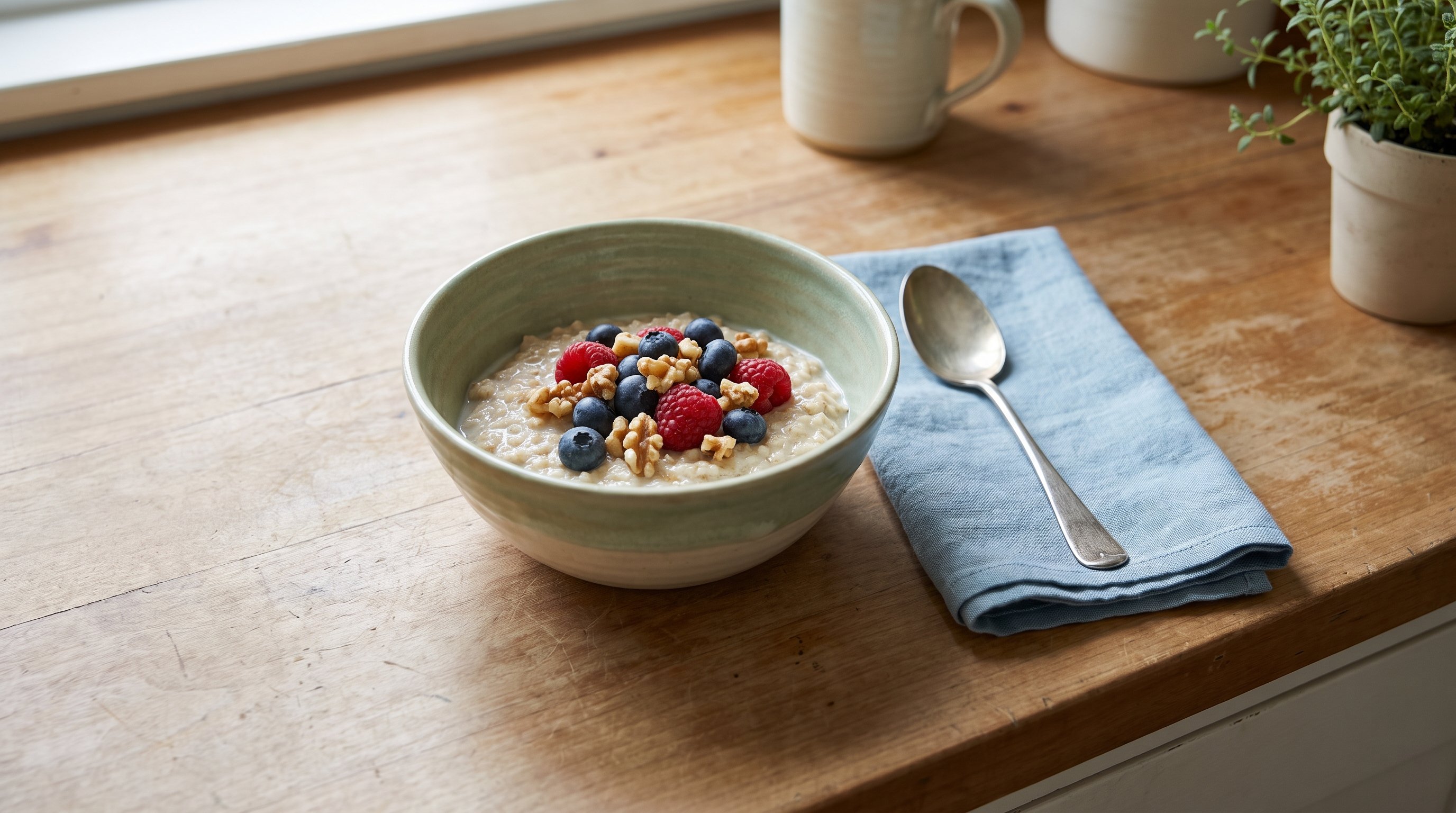
Put protein and fibre on the same plate and the effect compounds, which is why a balanced plate feels different three hours later than a plate of plain carbohydrate did.
How Often Should Energy Foods Appear on Your Plate?
Aim for Balance at Every Sitting, Not Just Once a Day
The goal is not one perfect meal but a pattern repeated three or four times a day. A small protein source, a fibre-rich carbohydrate, and a bit of fat at breakfast, lunch, dinner and maybe one snack keeps the dips from showing up between meals.
There is no single magic amount, but a plate that is roughly a quarter protein, a quarter whole-grain or starchy vegetable, and the rest non-starchy vegetables with a little fat is a workable template to repeat.
| Food | Main Role | Best Timing |
|---|---|---|
| Oats with nuts | Fibre plus fat | Breakfast |
| Eggs or Greek yoghurt | Steady protein | Breakfast or snack |
| Lentils or beans | Protein plus fibre | Lunch |
| Leafy greens | Fibre, low sugar | Lunch or dinner |
| Fish or poultry | Lean protein | Dinner |
Why Balanced Plates Beat Caffeine and Sugar Fixes
Coffee and sugary snacks promise instant energy, and they deliver it, briefly. The problem is the crash that follows, which often feels worse than the tiredness it was meant to fix.
A balanced plate is slower to feel exciting but far easier to keep up every day. There is no willpower battle at 3pm because the energy never crashed hard enough to need rescuing.
This is the whole argument for food over quick fixes: one route needs to be repeated and managed all day long, the other is built once into the meal and then simply works in the background.
Making Energy-Boosting Foods Work in a Normal Week
Nobody wants to plan every meal from scratch, and nobody needs to. Keeping a short rotation of two or three breakfasts, lunches and dinners that each include protein and fibre is enough to cover most of the week.
A shopping list built around those repeat meals also means fewer decisions at the shop, which is where plans usually fall apart. High-protein meal planning keeps that kind of shopping list and meal plan in one place, built around recipes that are easy to follow without extra thinking.
The point is not to eat differently every day, it is to eat the same reliable pattern often enough that it stops needing effort.
The Myth That One Superfood Can Fix Low Energy
No single food, however it is marketed, fixes fatigue on its own. Energy comes from the whole pattern of what is eaten across a day, not from one ingredient added to an otherwise unbalanced plate.
A spoonful of a trendy seed or powder added to a sugary breakfast does not undo what the rest of the meal is doing. The fibre and protein in the overall meal matter far more than any single addition.
The honest answer is less exciting than a superfood claim but more useful: build the whole plate around protein and fibre, and the energy follows from that, not from one item.
What Changes How Much Energy Food Actually Gives You
Three factors decide whether the same foods deliver steady energy or still leave gaps in the day.
Factors That Matter Most
- Meal timing - long gaps between meals let blood sugar drop low enough that any food eaten afterwards feels less steady, no matter how balanced it is.
- Portion balance - a plate heavy on carbohydrate and light on protein or fibre will still spike and dip, even if the ingredients themselves are good choices.
- Hydration - mild dehydration alone can feel like tiredness, so water matters alongside food, not instead of it.
Common Mistakes People Make Chasing Food Energy
Skipping Breakfast and Expecting Lunch to Catch Up
Going hours without eating in the morning leaves blood sugar low before the day has even started. A small protein-and-fibre breakfast prevents the slump that otherwise shows up by mid-morning.
Relying on Fruit Juice Instead of Whole Fruit
Juice removes the fibre that would have slowed the sugar release, so it behaves more like a sugary drink than a piece of fruit. Whole fruit, skin included where possible, keeps that natural brake in place.

Treating Snacks As an Afterthought
A snack of crackers or biscuits alone is mostly fast carbohydrate with nothing to slow it down. Pairing a snack with a little protein, like nuts or yoghurt, keeps the same gap in the day from causing a dip.
Forgetting That Under-Eating Also Causes Fatigue
Eating too little across the day, often from trying to cut calories too hard, leaves the body short of fuel no matter how well-balanced the small amount eaten is. Enough food matters as much as the right food.
Building Energy-Friendly Eating Into Your Routine
Knowing the theory is one thing, building it into daily meals without extra effort is another. A structured meal plan built around high-protein, easy-to-follow recipes ensures the protein-and-fibre balance that steadies energy is already part of the plan rather than something to calculate separately.
The right shopping lists cover the ingredients for a reliable rotation automatically, and progress trackers keep an eye on water intake too, since hydration plays its own part in how energetic the day feels. Senior Diet brings the meal plan, the shopping list and the tracking together so the pattern is easy to repeat without extra planning each week.

Feel Younger Every Day
Healthy Aging Made Simple
Keeping Steady Energy Part of Everyday Eating
The simplest next step is the plate in front of you right now: add a protein source and something with fibre if either is missing. That one adjustment, repeated at most meals, does more for steady energy than any single food ever could on its own.
Meal planning tools exist to make that repetition easier, with shopping lists that keep the balance built in rather than something to remember every day.
FAQ
There isn't one, because energy comes from the balance of a meal rather than one ingredient. A plate with protein, fibre and a little fat will always outperform any single food eaten alone.
Carbohydrate itself isn't the problem, how fast it digests is. Pairing it with protein and fibre, rather than removing it, is what keeps energy steady through the day.
A short rotation of two or three go-to meals for breakfast, lunch and dinner removes most of the daily decision-making. Senior Diet's recipes and shopping lists are built to make that rotation quick to prepare without extra planning.
Hydration, sleep and meal timing all play a part alongside food choice, so one good meal doesn't guarantee a flat, steady afternoon. Spacing meals evenly and drinking enough water through the day usually closes most of that gap.
Share this post